

IIM Indore Hosts Undergraduate Management Education Summit 2026
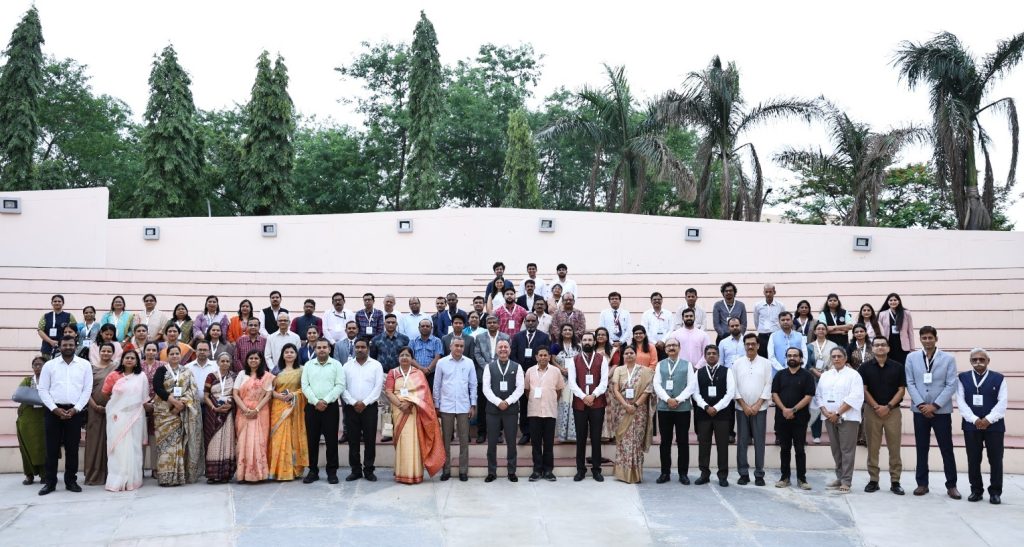
As the first Indian Institute of Management (IIM) to introduce the five-year Integrated Programme in Management (IPM), IIM Indore has consistently been at the forefront of redefining undergraduate management education in India. Building on this pioneering legacy and reaffirming its commitment to nurturing future leaders from an early stage, the Institute organized the Undergraduate Management Education Summit (UGMES) 2026 on July 11, 2026. The objective of this summit was to provide a platform to strengthen collaboration between schools and higher education institutions and to help students make informed academic and career choices. The summit, inaugurated by IIM Indore’s Director, Prof. Himanshu Rai, brought together school leaders, academicians, management educators, industry experts, IPM chairpersons from various IIMs, alumni, and students for a day of meaningful dialogue on the future of undergraduate management education. Guest of Honor, Prof. N. Ravichandran (Former Director, IIM Indore); and Prof. Aditya Maheshwari, Chair – IPM, were also present on this occasion.
Prof. Rai underscored the importance of equipping young learners with the curiosity, adaptability and clarity of purpose needed to navigate an increasingly dynamic world. Stressing that education must go beyond securing jobs and focus on shaping responsible, future-ready leaders, he urged students to pursue careers driven by passion rather than societal expectations. Calling upon educators to nurture curiosity and inspire students to think independently, Prof. Rai emphasized, “Meaningful learning begins when students are encouraged to question, explore and continuously improve themselves”. He also urged students to remain humble, embrace lifelong learning, develop a personal vision for their future, and focus on building their capabilities so they are prepared to make a meaningful impact on society and contribute to India’s growth.
Prof. Ravichandran reflected on the vision behind the launch of the Integrated Programme in Management (IPM) in 2011 and the journey that transformed it into one of the country’s most sought-after undergraduate management programmes. He lauded the Institute’s continued efforts to nurture and strengthen the programme over the years under the leadership of Prof. Rai. Stressing that the essence of management education remains unchanged despite rapid technological advancements, he remarked, “Education is not for employment, education is for employability.” He said that the objective of higher education should be to develop individuals who possess the ability to think critically, identify opportunities, and make meaningful contributions to society, rather than merely acquire job-specific skills, and that’s what the objective of IPM is.
Prof. Aditya Maheshwari outlined the vision behind organizing the Undergraduate Management Education Summit and reflected on IIM Indore’s pioneering role in introducing the Integrated Programme in Management (IPM).“This platform will enable us to have a conversation on what lies ahead in the future and how we can provide a viable alternative for students beyond the traditional career pathways,” he said.
The summit featured three panel discussions covering diverse dimensions of undergraduate management education. The first panel, “Reimagining Education: Collaborating Across Levels,” was moderated by Prof. Ranjeet Nambudiri, Dean (Faculty), IIM Indore. The panel comprised of Prof. N. Ravichandran, Prof. M. P. Gupta, Director, IIM Lucknow, Prof. Ashwini Sharma, Director, JK Lakshmipat University, Prof. Rashmi Rai, Dean, School of Business and Management, Christ University, Prof. Tapash Kumar Ganguli, Director, NICMAR Pune, Ms. Rashmi Lohaan, Regional Head, ABG Schools, Prof. Priestly Shan, Vice Chancellor, Alliance University, and Prof. Kawal Gill, Principal, Sri Guru Gobind Singh College of Commerce, Delhi. The panelists emphasized the importance of strengthening school-higher-education linkages, interdisciplinary learning, and creating flexible academic pathways to better prepare students for the future.