

IIM Indore Hosts International Conference on the Future of MBA Education, Examining AI, Ethics, and Sustainability
Global academics deliberate on the need to make management education future-ready, responsible and responsive to a rapidly changing world
What should an MBA teach when artificial intelligence is changing the way businesses think and operate, when ethical leadership is becoming as important as commercial success, and when sustainability is no longer a peripheral concern but an integral part of business decision-making?
This question took centre stage at the International Conference on “The Future of MBA Education: AI, Ethics and Sustainability”, conducted by the Indian Institute of Management Indore (IIM Indore) today, October 08, 2026.
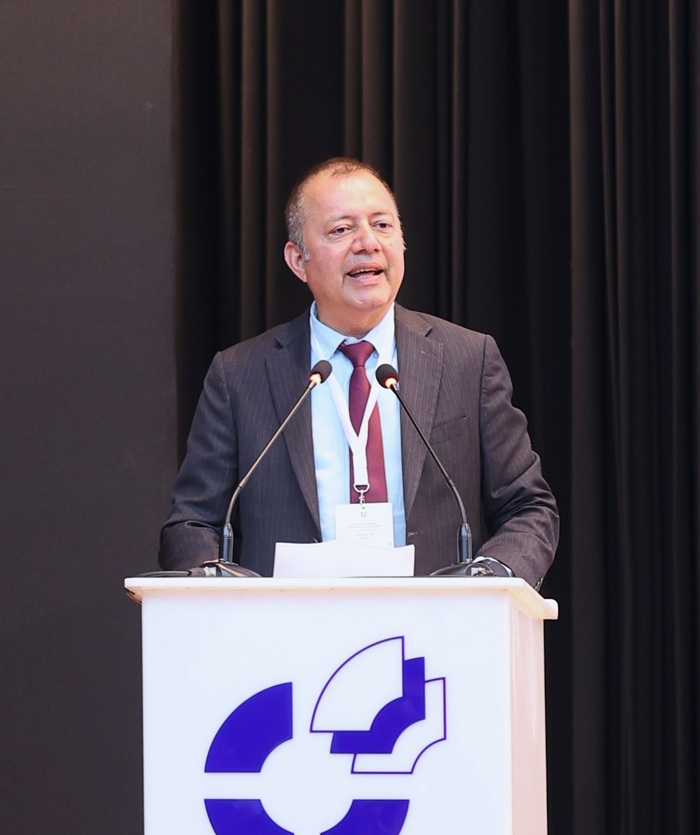
Inaugurated by IIM Indore’s Director, Prof. Himanshu Rai, the conference brought together leading international voices from management education and business scholarship. The conference examined how business schools needed to rethink the meaning of excellence in an environment defined by rapid technological change, heightened expectations of responsible leadership, and an urgent need for sustainable value creation.
In his inaugural address on “Redefining Excellence in Management Education”, Prof. Rai emphasized that excellence in management education could no longer be measured only by academic achievement, placements, or managerial competence. He said that the real test of management education lies in its ability to prepare individuals who can make sound decisions amid uncertainty, understand the consequences of those decisions, and create value that extends beyond an organization’s immediate interests. “Management education must not merely prepare students to succeed in the world as it exists. It must prepare them to understand the world that is emerging, and to take responsibility for shaping it,” Prof. Rai said. He added that artificial intelligence was compelling business schools to reconsider not only what students needed to know but also what machines could do, what human beings would remain uniquely responsible for, and how judgment would become increasingly important in a technology-enabled workplace. He said that the purpose of education should not be to compete with technology, but to ensure that technology remains guided by human values, wisdom, and responsibility.
Conference Convener Prof. Shruti Tewari (Dean – Research) highlighted the importance of creating meaningful conversations around the forces reshaping management education. She welcomed the international participants and emphasized the need for business schools to remain responsive, forward-looking, and deeply connected to the evolving needs of business and society.
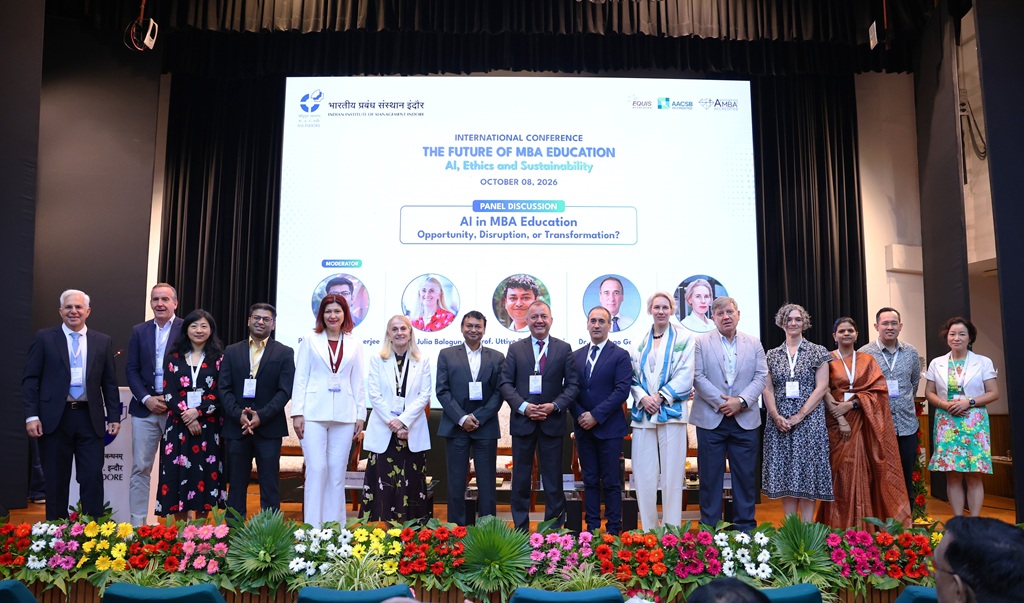
The conference witnessed three panel discussions that examined the technological, ethical, and sustainability dimensions of the future of management education.
The first panel discussion, “AI in MBA Education: Opportunity, Disruption or Transformation”, brought together Prof. Julia Balogun, University of Liverpool; Dr. Uttiyo Raychaudhuri, Co-founder, South Asia International Education Network; Dr. Anna Tyshetskaia, Chief Vice President of HSE University; and Dr. Santiago Garcia, Vice President for Strategic Development & International, Kedge Business School, with Prof. Sayantan Banerjee, Faculty, IIM Indore, as the moderator. The discussion examined how artificial intelligence was changing the learning environment, reshaping the role of faculty, and redefining the capabilities expected from future managers.
The panelists mentioned that AI could move beyond being a productivity tool to become a force that fundamentally altered how management problems were approached. The discussion also highlighted the need for students to develop the ability to question AI-generated insights, understand their limitations, and combine technological capability with critical thinking and managerial judgment. The panel noted that the challenge for business schools was not simply to teach students how to use AI, but to teach them how to use it responsibly and intelligently.
The second panel discussion, “Ethics, Integrity and Responsible Leadership in Business Schools”, featured Dr. Bodo B. Schlegelmilch, Dean and Professor Emeritus, WU Vienna University of Economics and Business, Austria; Dr. Xiang Li, Director of Internationalization, University of Glasgow, Scotland; Dr. Gaston Fornes, Dean, UBI Business School, Brussels; and Prof. Weng Marc Lim, Dean, Sunway Business School. The session was moderated by Prof. Ranjeet Nambudiri, Faculty, IIM Indore. The panel examined how business schools could embed ethics and integrity more deeply into management education and prepare future leaders to make responsible decisions while balancing organizational performance with wider societal responsibilities. The panelists emphasized that ethical leadership could not be reduced to compliance or a set of rules. It had to become part of how managers interpreted situations, exercised authority, and made choices when competing interests were involved. As businesses increasingly operate across cultures, markets, and technologies, the panel observed that future leaders would need the ability to recognize ethical dilemmas, engage with differing perspectives, and remain accountable for the consequences of their decisions.
The third panel discussion, “Sustainability in MBA Education: From Aspiration to Action”, featured Prof. Sunny Jeong, Associate Professor, Business & Economics, Wittenberg University, Ohio, USA; Prof. Laurentiu Neamtu, Vice-Dean, International Development and Coordinator of Strategic Projects, UPF Barcelona School of Management; Dr. Leasa Weimer is the Director of Global Partnerships, University of Denver and Prof. Zhanna Belyaeva, Associate Professor at the Graduate School of Economics and Management at Ural Federal University. The session was moderated by Prof. Shruti Tewari, Dean (Research), IIM Indore. The panel examined how sustainability could be integrated more meaningfully into MBA education, moving beyond broad aspirations to practical approaches that could shape managerial thinking, strategy, and decision-making. The discussion focused on the need to equip future managers with the ability to understand long-term consequences, incorporate sustainability into strategic decisions, and recognize that organizational performance increasingly had to be considered alongside wider social and environmental impact.
Conference Convener Prof. Shruti Tewari (Dean – Research) highlighted the importance of creating meaningful conversations around the forces reshaping management education. She welcomed the international participants and emphasized the need for business schools to remain responsive, forward-looking, and deeply connected to the evolving needs of business and society.
The conference witnessed three panel discussions that examined the technological, ethical, and sustainability dimensions of the future of management education.
The first panel discussion, “AI in MBA Education: Opportunity, Disruption or Transformation”, brought together Prof. Julia Balogun, University of Liverpool; Dr. Uttiyo Raychaudhuri, Co-founder, South Asia International Education Network; Dr. Anna Tyshetskaia, Chief Vice President of HSE University; and Dr. Santiago Garcia, Vice President for Strategic Development & International, Kedge Business School, with Prof. Sayantan Banerjee, Faculty, IIM Indore, as the moderator. The discussion examined how artificial intelligence was changing the learning environment, reshaping the role of faculty, and redefining the capabilities expected from future managers.
The panelists mentioned that AI could move beyond being a productivity tool to become a force that fundamentally altered how management problems were approached. The discussion also highlighted the need for students to develop the ability to question AI-generated insights, understand their limitations, and combine technological capability with critical thinking and managerial judgment. The panel noted that the challenge for business schools was not simply to teach students how to use AI, but to teach them how to use it responsibly and intelligently.
The second panel discussion, “Ethics, Integrity and Responsible Leadership in Business Schools”, featured Dr. Bodo B. Schlegelmilch, Dean and Professor Emeritus, WU Vienna University of Economics and Business, Austria; Dr. Xiang Li, Director of Internationalization, University of Glasgow, Scotland; Dr. Gaston Fornes, Dean, UBI Business School, Brussels; and Prof. Weng Marc Lim, Dean, Sunway Business School. The session was moderated by Prof. Ranjeet Nambudiri, Faculty, IIM Indore. The panel examined how business schools could embed ethics and integrity more deeply into management education and prepare future leaders to make responsible decisions while balancing organizational performance with wider societal responsibilities. The panelists emphasized that ethical leadership could not be reduced to compliance or a set of rules. It had to become part of how managers interpreted situations, exercised authority, and made choices when competing interests were involved. As businesses increasingly operate across cultures, markets, and technologies, the panel observed that future leaders would need the ability to recognize ethical dilemmas, engage with differing perspectives, and remain accountable for the consequences of their decisions.
The third panel discussion, “Sustainability in MBA Education: From Aspiration to Action”, featured Prof. Sunny Jeong, Associate Professor, Business & Economics, Wittenberg University, Ohio, USA; Prof. Laurentiu Neamtu, Vice-Dean, International Development and Coordinator of Strategic Projects, UPF Barcelona School of Management; Dr. Leasa Weimer is the Director of Global Partnerships, University of Denver and Prof. Zhanna Belyaeva, Associate Professor at the Graduate School of Economics and Management at Ural Federal University. The session was moderated by Prof. Shruti Tewari, Dean (Research), IIM Indore. The panel examined how sustainability could be integrated more meaningfully into MBA education, moving beyond broad aspirations to practical approaches that could shape managerial thinking, strategy, and decision-making. The discussion focused on the need to equip future managers with the ability to understand long-term consequences, incorporate sustainability into strategic decisions, and recognize that organizational performance increasingly had to be considered alongside wider social and environmental impact.
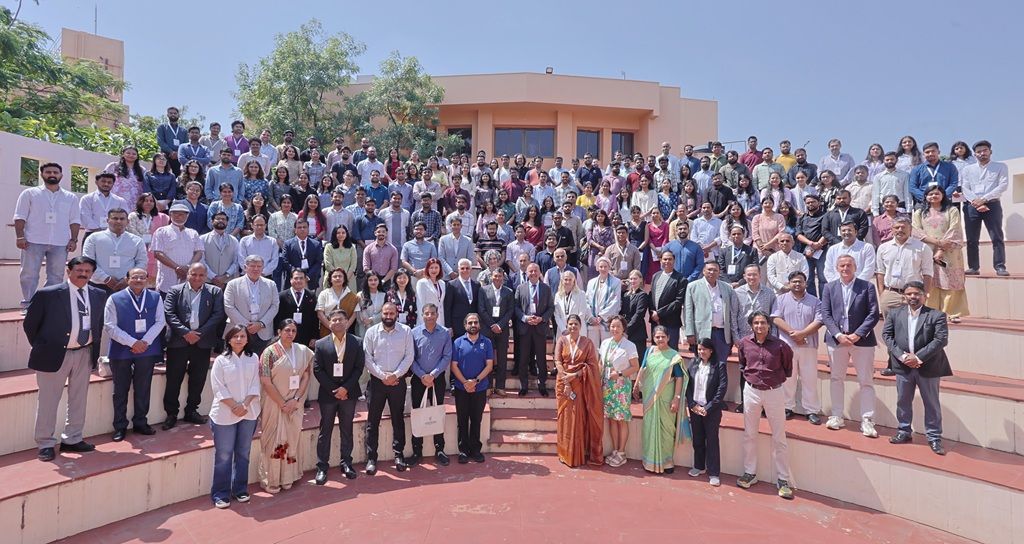
The conversations across all three panels concluded that the MBA of the future could not remain confined to conventional models of managerial success. Technology would change the tools available to managers, but ethics would influence how those tools were used, while sustainability would increasingly shape the definition of value itself.
Through the conference, IIM Indore brought the global management-education community into a conversation about a fundamental transition underway in business education.